Vocational Rehabilitation
Vocational rehabilitation is a continuum of individualized, restorative services mutually planned by the vocational rehabilitation counselor, the claimant, and other stakeholders, to facilitate suitable re-employment.
Basic components include:
- records review
- diagnostic interview
- collaboration with the medical team and legal team
- transferable skills analysis
- vocational testing
- on-site job analysis
- coordination with education and other providers
- labor market research
- employer sampling
- placement planning
- job seeking skills education
- job development
- post-placement follow-up services
- comprehensive report writing
Vocational case management is the implementation of goal-directed accountabilities as follows:
- vocational evaluation and plan development
- coordination with medical providers
- direct job development and job placement
- reporting
On each case, the vocational case manager
- Conducts a thorough file review: Reviews pertinent medical and vocational records, highlights key findings, addresses rehabilitation questions and makes recommendations.
- Establishes Rapport: Builds positive relationships between case participants in order to foster best outcomes. Provides a professional disclosure statement to the claimant, up front, which outlines the case manager's background and purpose, and confidentiality standards under HIPAA guidelines.
- Obtains documentation of functional limitations and/or work restrictions: Interviews medical providers and/or coordinates functional capacity evaluation (FCE) in order to document the capacities and tolerances of the claimant.
- Conducts a diagnostic interview with the claimant: Determines medical issues, socioeconomic factors, work history, education, abilities, interests, barriers and current motivation in order to establish a vocational profile toward assessment and/or planning.
- Performs a transferable skills analysis: Examines acquired job skills that will allow the continuation of current knowledge and abilities accross job families, within medically-designated work capacities.
- Conducts an on-site job analysis: Uses measurement instruments and photography to document the essential functions and other requirements of a position, for rehabilitation goal setting. In the case of ergonomic job analysis, makes recommendations to modify the work site, in order to prevent or reverse repetitive motion problems.
- Implements placement strategies: Examines both internal and external job placement potentials. Follows the vocational rehabilitation hierarchy by first consulting with the employer at injury and presenting transferable skills there. In external placement, develops a plan using principles of person-environment job matching.
- Teaches job seeking skills: Educates the claimant in effective employer approaches to include writing a functional resume, accessing the hidden job market, resource utilization, job interviewing, and following up.
- Researches occupations within target labor markets: Utilizes labor market data sources to establish statistical incidences of viable occupations, documenting both the existence of positions, growth and pay rates.
- Samples employers: Makes direct contact with hiring managers to document qualifications and requirements, vacancy rates and application procedures. Shares sampling results with stakeholders for employability determination and to provide job leads to the claimant.
- Communicates with claimant: Provides a supportive and informative environment to diminish re-employment barriers and facilitate suitable re-employment.
- Follows up: Stays in contact with the newly re-employed claimant to ensure successful transition back into the workforce.
- Closes case: Leaves claimant with the tools and know-how to adjust successfully to new work and documents case impact.
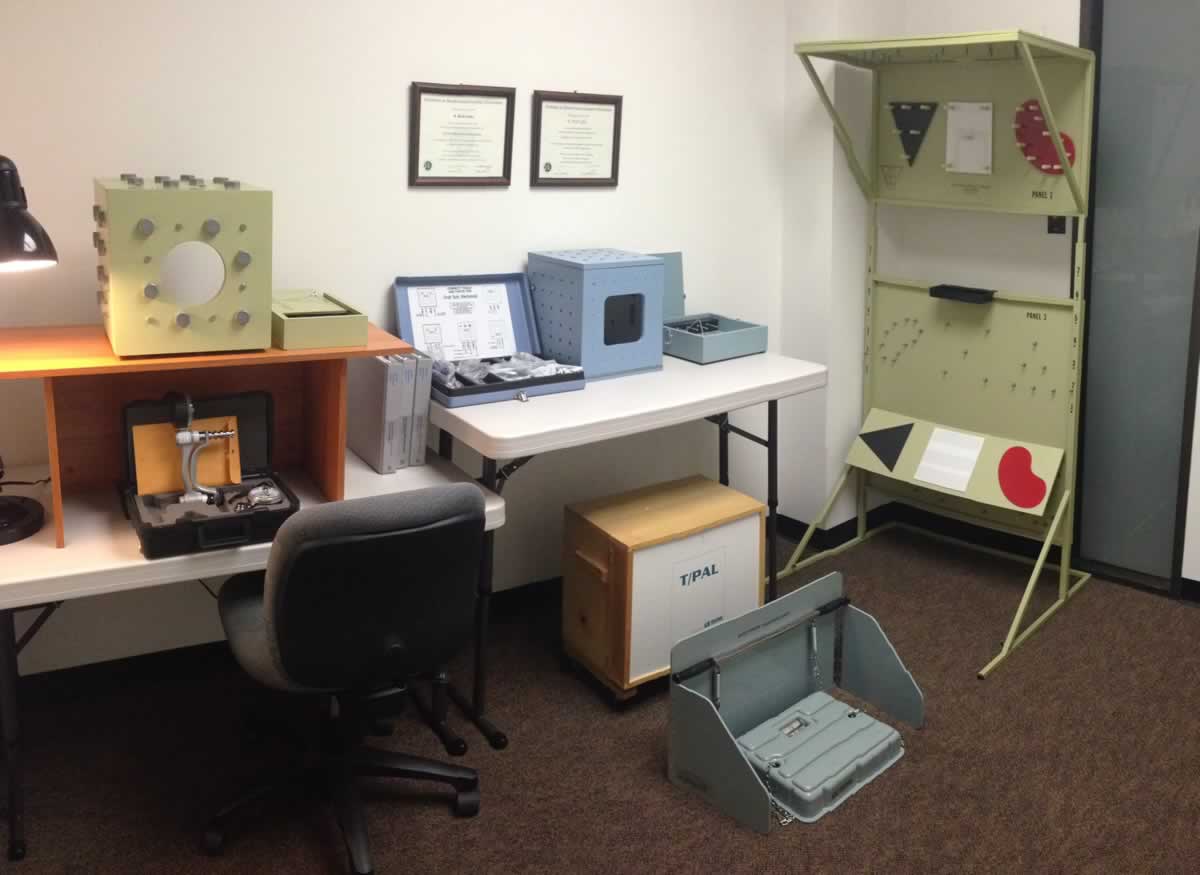
Functional tests use simulated work components.
Larger Image